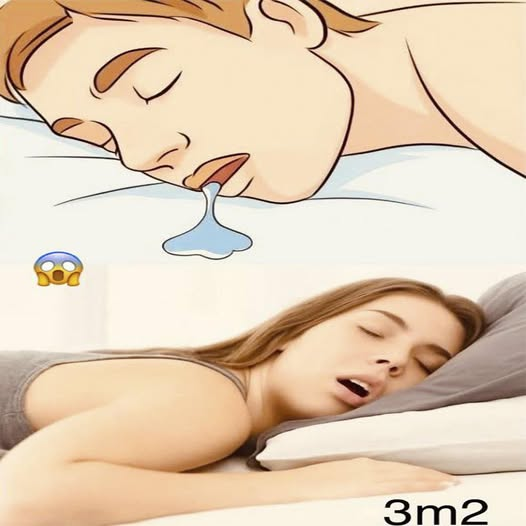
Drooling during sleep is an experience that many people find uncomfortable or even embarrassing. However, this phenomenon could have a much more positive explanation than it seems. According to recent studies in neuroscience and sleep, drooling while you sleep could be a sign that your brain is entering a state of deep, restorative rest.
Drooling typically occurs when the body enters the deepest phase of sleep, known as slow-wave sleep or phase N3 of the non-REM sleep cycle. During this stage, the body’s muscles, including the jaw, completely relax. This relaxation can cause the mouth to open slightly, allowing saliva to pool and eventually spill. Far from being a sign of neglect or a health problem, this may indicate that the body has reached a state of optimal rest.
Furthermore, sleeping soundly has direct benefits for brain function. During deep sleep, the brain eliminates toxins accumulated during the day, consolidates memory, and repairs neural connections. This is when many of the vital processes for learning, concentration, and emotional well-being occur. Therefore, if you drool, it could be a sign that you’re regularly reaching these critical stages of sleep.
Of course, it’s important to consider the context. If the drooling is excessive, interferes with breathing, or is accompanied by other symptoms such as loud snoring or sleep apnea, it may be advisable to consult a specialist. In these cases, drooling could be associated with other disorders that require medical attention.
In conclusion, if you wake up with a wet pillow from time to time, don’t worry too much. It could be a minor annoyance with a big benefit: a sign that your brain is doing its job while you’re getting a good night’s sleep.